






















Artificial intelligence (AI) has garnered a reputation for producing quick essays and generating slop posted all over social media. But below the surface, AI is tricking more than grandmothers on Facebook. AI data centers use the money and resources of everyone in America, with no end in sight.

AI is not a new concept, and neither are data centers. The development of AI dates back to 1956. A data center is “a location where computing and networking equipment is used to collect, process, and store data, as well as to distribute and enable access to resources,” according to Fortinet, a global cybersecurity company. However, data centers training AI programs require a large amount of power and water, much more than other types of data centers. Cisco claims, “Unlike regular data centers, AI facilities are optimized for high-performance computing tasks, allowing quick data processing and analysis.” This also means that an AI facility typically consumes as much electricity as 100,000 households a year. Most of this energy consumption comes from air-conditioning or liquid cooling, which is involved in cooling down the servers processing data.
With plans to build more data centers in Ohio, Virginia, New Jersey, Illinois, and Pennsylvania, this energy consumption is only going to get worse. BloombergNEF expects data centers to draw 106 gigawatts by 2035, up from today’s 40 gigawatts. Furthermore, IBM CEO Arvind Krishna believes that all the spending required to produce these data centers will never pay off.
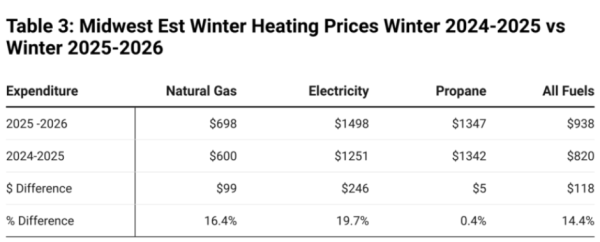
Who is paying for all of the electricity? Here’s a hint: it’s not the billionaires behind the AI industry. Electricity demand is growing faster than supply, driving up prices across the Western and Northeastern states. Household utility costs could rise 10% this winter, according to the National Energy Assistance Directors Association. Additionally, electricity prices are expected to outpace inflation by 2026. As the industry expands, so will the prices. Virginia resident Kevin Stanley shares that his energy bills are 80% higher than they were three years ago. Ohio residents have similar issues, with a 12% hike in residential electricity costs since last year.
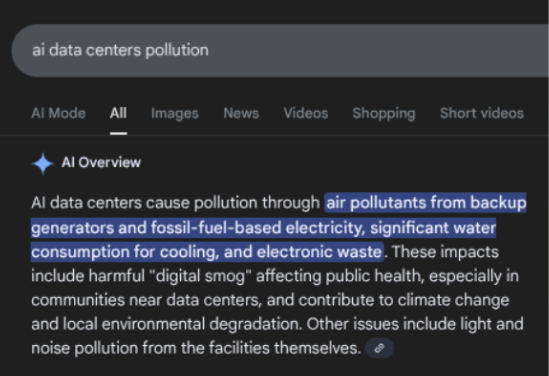
When research was done for this article, information was immediately presented in AI overviews on Google. Ironic, isn’t it? In this day and age, it can be impossible to avoid AI altogether, especially with the clear benefits. These systems are used every day in weather apps, virtual assistants, and social media. Despite this, a majority of the American population feels negatively about AI’s impact. Ultimately, it’s up to the wealthy people who perpetuate the AI data centers to put an end to the high electricity costs. But by reducing their use of AI, the average American may be able to minimize their contribution to the pollution and high costs these data centers are causing.