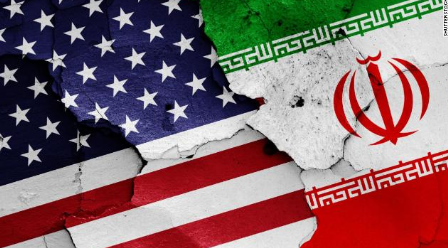
The nation is on edge. Between American and Israeli forces bombing targets in Iran, and the retaliation from the remaining government in Tehran, the fear of another “forever war” in the Middle East is on the forefront of most Americans’ minds. To some, it may seem like the US has constantly been involved in military conflicts in the region since the September 11th attacks, however, the history is much deeper than that.
Post WWII-Pre Iranian Revolution
In 1951, Iran’s Parliament took the opportunity to nationalize the very profitable oil industry, taking it back from the British’s “Anglo-Persian Oil Company” better known today as BP. They elected Mohammed Mossadegh as Prime Minister, which contrasts the widespread assumption that it was the US who brought democracy to the country. In a war-weary world, the British and US decided that more covert measures would be required to protect their oil interests. They staged a coup in 1953, overthrowing the democratically elected leader and replacing him with a Shah, turning a constitutional monarchy into an absolute monarchy. The real winner in this coup was Western oil companies, with US companies taking around 40% of the profits of Iranian oil production.
Besides just oil, Iran was a strategic location, sharing a border with the USSR. Under Eisenhower’s presidency, the US helped Iran build their nuclear capabilities under the “Atoms for Peace” program. Iran received the Tehran Research Reactor, the nation’s first nuclear reactor, as well as 5.58kg of enriched uranium. This was intentionally done to give the US another ally in the region Nixon allowed Iran to purchase high-tech military arms in 1972. In 1975, President Ford approved a plan allowing Iran to process U.S. nuclear materials and purchase a plutonium reprocessing facility. They had also become very Westernized, with even women attending universities and dressing how they wanted. Iran began to grow their military under the Shah, thanks to oil profits and US support. This concerned the US, and in 1976, the U.S. covertly supported Saudi Arabia’s move to drive down oil prices. This hurt Iran’s economy, angering many Iranians who didn’t support the Shah. Despite humanitarian concerns about the Shah, President Jimmy Carter voiced his support for the leader and the nation, calling it “an island of stability in one of the more troubled areas of the world.” This sparked outrage among anti-Shah Iranians and Americans, setting the stage for the Iranian Revolution.
Iranian Revolution
Like most revolutions, the Iranian Revolution was very complex. Various groups with differing ideologies managed to agree on one ideal, and end the Shah and Western interference, as both had caused damage to the country. The revolutionary Iranians found a leader in Ayatollah Ruhollah Khomeini, who had previously been exiled for speaking harshly against the Shah. Many clashes between protesters and the SAVAK, the secret police, ended with bloodshed, but the movement pressed forward. Eventually, the Shah was forced to flee, ending his reign. Despite the revolution being a popular movement, the established government became a theocratic republic, known as The Islamic Republic of Iran. Like in most Islamic countries, the rights of women were stripped, and Sharia law is the rule of the land.
Hostage Crisis
Probably the most infamous conflict between the US and Iran, the crisis saw Iranian revolutionary students attacking the US Embassy on November 4, 1979, and taking 66 Americans hostage, 52 of which would remain hostages until January 20, 1981. The hostage-takers demanded that the US hand over Iranian king Mohammad Reza Pahlavi, who was granted asylum by the Carter administration for cancer treatment, however, he died before the conflict could be resolved. The hostages told terrors of abuse, neglect, and threats of death from their captors. The botched Operation Eagle Claw, which intended to free the hostages, demoralized the US. Even when the conflict was ultimately resolved, distrust for each other caused bad relations between Iran and the US.
1980-2001
Under Reagan’s presidency, Iran would often fund Hezbollah and other terrorist organizations to attack the US covertly. The US Embassy and Marine barracks bombings in Beirut that killed hundreds of Americans could be traced to Iran. Terrorists held seven Americans hostage in Lebanon, and Reagan’s attempt to free the hostages resulted in the Iran-Contra Affair. Operation Praying Mantis and Operation Nimble Archer saw the US Navy sinking two Iranian oil platforms and a warship in retaliation for mining in the Persian Gulf. This was also the time period in which Ali Khamenei, the Supreme Leader of Iran who was killed in the US-Israeli attacks, entered office.
War on Terror Era (2001-2021)
While Iran may have initially been sympathetic towards the US, tensions between the two countries were on the rise. The US would accuse Iran of funding terrorists, and Iran would accuse the US of directing drone strikes in Iran. George W. Bush included Iran in his “Axis of Evil” speech. There was also fear that Iran was growing their nuclear capabilities. Sanctions and alleged insurgent funding were the main forms of warfare against Iran by the US. Iran’s main form for warfare was to blockade the Strait of Hormuz, a major waterway and choke point for oil exports. The concern of Iran obtaining a nuclear weapon was a major concern, and Iran would often threaten that they were close to obtaining one. Under Trump’s first presidency, the U.S. assassinated Iranian General Qasem Soleimani in a drone strike, resulting in retaliatory strikes on US bases in Iraq. Tensions remained very high between the two nations at this time
Within the last year
These strikes on Iran are not the first ones Trump has launched on Iran during his second term. In June of 2025, US and Israeli forces bombed multiple key nuclear sites and killed multiple scientists and generals, claiming to have destroyed Iran’s nuclear capabilities. Mass protests by Iranian civilians regarding the economic and political situation had killed over 30,000 people in just 48 hours, sparking international outrage. Many Iranians took to social media, begging for Trump and the US to intervene. Finally, on February 28th, the strikes began. Many of Iran’s leaders, including the Supreme Leader, were killed in calculated strikes. Many Iranians both in the nation and around the world took to the streets, cheering at the thought of liberation in the future. Iran’s retaliatory strikes hit multiple US bases in the Middle East, along with lots of Israel. Unfortunately, the Pentagon has reported the death of seven US soldiers, and many US lawmakers have been very critical of the strikes.
Both sides of the conflict have historically wronged each other, and while the fear of the US becoming a part of another unnecessary war in the Middle East, one thing is certain. Iran’s citizens have suffered at the hands of an oppressive Islamic regime that oppressed women, executed homosexuals, and slaughtered thousands of their citizens for simply speaking out. Hundreds of civilians have tragically died in these strikes, including a girls school that was hit by a US missile (though it should also be noted that the school was 200 feet away from an IRGC base). However, these numbers pale in comparison to the blood on the hands of Iran’s government. Whether you support the recent actions of the US government or not, your heart should go out to the people, in hopes that they can take their country back.