



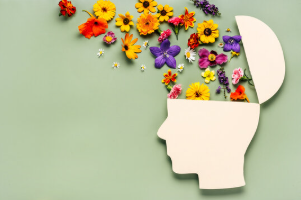










Not all struggles are visible to the eye. Some aren’t even visible through scans. They don’t show visible signs or fit into what we as a society already understand. Yet those invisible struggles are often the ones that are most quickly dismissed.
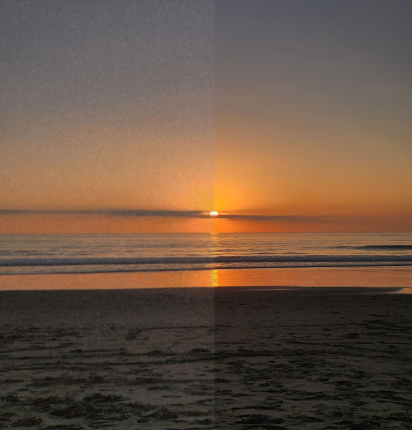
Visual Snow Syndrome, also known as VSS, is one example. It is a neurological condition that affects how people see the world, often described as seeing static or “snow” across the visual field. According to the Visual Snow Initiative, a nonprofit organization dedicated to research, education, and awareness of Visual Snow Syndrome, VSS can not only impact vision but also sensory processing, hearing, cognition, and overall quality of life. VSS is classified as a network brain disorder, meaning it involves dysfunction across multiple interconnected regions of the brain rather than a single cause.
Despite this, people with VSS are frequently told their symptoms are just symptoms of anxiety or psychological issues. That assumption is common, even though it has been scientifically debunked. The Visual Snow Initiative states clearly that VSS is not the result of psychiatric or psychological illness. However, skepticism is still common, especially because the condition is not taught or widely known.
Part of this doubt comes from how we define legitimacy. Many people are taught to trust only what can be measured easily or seen clearly. If a condition does not appear on standard testing or has no immediate cure, it often gets treated as less real. Labeling poorly understood symptoms as medical conditions risks overdiagnosis or self-diagnosis and could divert from evidence-based care.
Science depends on caution, review, and ongoing research. However, skepticism becomes harmful when it turns into dismissal. A lack of widespread awareness does not mean a condition does not exist. In the case of VSS, research has grown significantly in recent years, and awareness is catching up.
The extent of the condition alone disproves the idea that it is rare or imaginary. The Visual Snow Initiative estimates that between 2% and 3% of the global population is affected by VSS, with severity ranging from mild to profoundly debilitating. That percentage represents up to 240 million people worldwide. Even if symptoms differ from person to person, the number suggests that VSS is not an isolated situation.
Historically, misunderstanding has had consequences. According to the American Academy of Ophthalmology, the world’s largest association of eye physicians and surgeons, symptoms of VSS were often mistaken for hallucinations of psychogenic origin rather than visual illusions caused by misinterpretation of visual information. This misclassification led to inadequate patient care and reinforced the belief that patients’ experiences were not credible.
VSS is not the only condition with this pattern. Many visible conditions, from chronic pain to neurological and sensory disorders, face the same cycle of disbelief. When symptoms cannot be seen, patients are somehow expected to prove them. When explanations are incomplete, experiences are questioned, even when they’re very much real.
Some argue that maintaining skepticism protects how reliable science is. And that is true to an extent, but skepticism should allow investigation, not silence. Listening to people describe their experiences does not weaken science. It often strengthens it by pointing researchers toward questions that still need to be answered.
Even the clinical research timeline of VSS shows its complexity. The Cleveland Clinic is a top-ranked institution known for its leadership in neurology and for producing evidence-based clinical research. The Cleveland Clinic notes that VSS may go away on its own in some cases, while others may experience their VSS worsening or getting more prominent. Uncertainty does not make an experience invalid, but rather human.
At best, this conversation is not about diagnosing conditions or settling scientific debates. It is about how we respond when someone tells us they are struggling in ways we cannot immediately understand. Belief does not require full comprehension, and empathy does not require proof. Just because something is invisible does not mean it is imagined. And just because we do not have all the answers yet does not mean we should stop listening.