























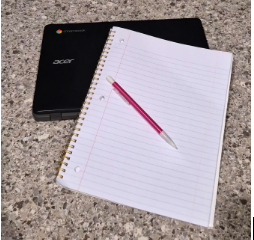
As laptops and tablets become standard resources in classrooms, many schools are moving away from traditional pencil and paper learning. While technology allows students to work quickly and efficiently, research shows that relying on computers for learning may hurt students’ ability to learn effectively.
One major reason why pencil and paper learning is more effective is its impact on comprehension and memory. Research shows that students absorb and retain information better when reading printed material rather than text on screen. A newer study found that children aged ten to twelve exhibited significantly deeper cognitive processing when reading printed text, indicating that paper supports more thorough reading than screens. This kind of information processing matters for academic success, especially in subjects that require careful analysis of text.
Educational research summarized by WINSS Solutions also supports this idea. WINSS Solutions is an online organization dedicated to creating sustainable futures. Reviews of multiple studies have found that students scored higher on comprehension tests when using printed materials compared to digital reading formats, especially for longer or more complex texts. Those findings suggest that paper helps students retain details they might miss on screens.
Experts explain that this difference occurs because printed text allows students to mentally map out information. According to researchers cited by School Board Leader, screens often encourage “shallow reading,” where students skim text rather than absorb it deeply. School Board Leader is an organization dedicated to academic excellence in North and South Carolina. This observation aligns with educators’ concerns that online formats, with their scrolling and distractions, do not engage the brain the same way physical pages do. When students read on paper, they can physically track where information appears on the page, which improves memory and understanding.
The tactile act of writing itself also contributes to better learning. According to WINSS Solutions, teachers and researchers note that handwritten notes involve motor skills and cognitive engagement that typing does not replicate.
Teachers and parents have also observed that students reading on screens are easily pulled away from learning by distractions like the internet and notifications. In many schools that have increased screen use, students seem engaged at first but later struggle to recall what they read, an experience some educators describe as students “thinking they understand but not remembering details.”
However, for those schools that have scaled back on technology, students show improved attention and less time spent switching between apps and tabs. When laptops are replaced with printed materials and paper assignments, students face fewer distractions. Teachers note that students are more likely to reread printed passages and annotate physically, which helps students retain information.
However, laptops and tablets may have valuable benefits that paper cannot give. Screens provide access to interactive tools, multimedia resources, and features like text-to-speech that can support students with different learning needs. Additionally, students should grow accustomed to learning with computers as digital skills are essential in a technology-driven world. These perspectives are important, especially for preparing students for careers where digital literacy matters.
Even so, acknowledging the role of technology does not mean it should dominate every aspect of learning. Too much screen time can also cause headaches and eye strain. And while computers can be useful for research, collaboration, and accessibility, they often fall short when the goal is comprehension and learning of a material. Paper supports focused reading without distractions and also promotes note-taking habits that lead to better long-term understanding. It is also easier to show work on paper and explain ideas that may be forgotten when using a laptop.
As teaching methods in schools continue to change, evidence has shown that abandoning traditional learning methods comes at a cost. Reading and writing on paper consistently lead to stronger comprehension, better focus, and improved memory. These skills are essential for academic success. While technology may be useful in some situations, it should not replace the learning tools that best support how students actually think and learn. Pencil and paper encourage deep engagement, better attention, and understanding, making them a stronger material for education. If the goal of school is to learn, not just temporarily memorize, then classrooms should keep laptops closed and put papers back on desks.