





















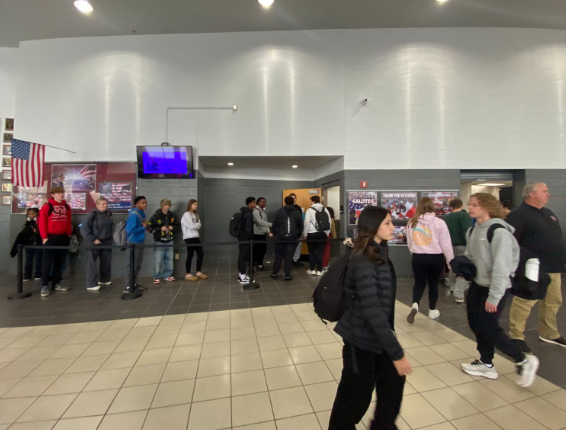
Although Oak Hill’s schedule lists lunch as 30 minutes, students realistically get only 15 to 20 minutes to eat. The Ohio Department of Education guidelines recommend that students have thirty minutes to eat, yet at Oak Hills, this includes passing periods. The five minutes spent walking to the commons significantly cuts into the actual time students have to eat. Extending lunch would give students time to recharge, socialize, and eat without feeling rushed. Kipton D. Smilie, the Associate Professor of Education at Missouri Western State University, explains that “Conversation is fundamentally for its own sake, as are leisure, liberal education, and the feast. All are interconnected, and all are vanishing from our schools and our lives. But the school cafeteria at lunch can serve as the best chance to recapture and reintroduce these aspects to generations of future students.” This insight highlights the idea that school lunch periods at Oak Hills need to be extended because of the nutritional, social, and leisurely value they bring to students.
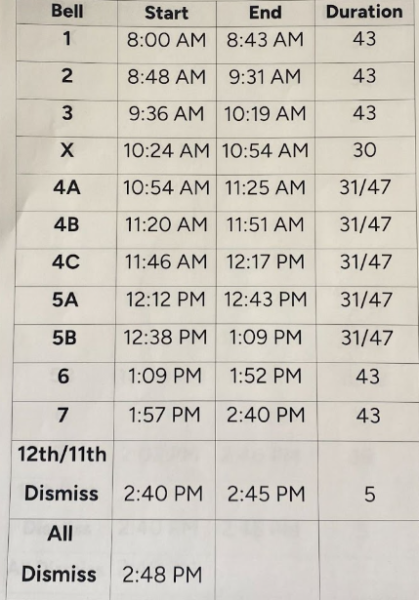
Junior Athena Oliverio shared that her fourth bell class is in the 500s, a hallway that is the farthest away from the lunch room, so it takes her at least five minutes just to walk there. The bell that starts 4c lunch rings at 11:46, and she shared that she gets to lunch around 11:51 most days. While the schedule shown says 4c ends at 12:17, the bell to leave lunch actually rings at 12:09. This doesn’t account for the time it takes to wait in the lunch line. Additionally, if students choose to wait in the wrap line, which many know can take anywhere from 5 to 10 minutes, their lunch will be further cut. Oliverio’s experience highlights why Oak Hills needs longer lunch periods: students like her in similar situations lose valuable time, ultimately impacting their focus and academic performance by rushing them and not giving them time to recharge.
School lunch periods need to be longer because they have a direct impact on students’ academic success and well-being. Robert Klotz Jr., a teacher at Oak Hills, states, “With longer lunches, students can have more time to socialize and build more relationships, especially with the new cell phone policy, which can make the school a more positive place.” Since students don’t have cell phones at lunch anymore, longer lunches can further benefit by encouraging more face-to-face interaction and socialization. Additionally, a 2017 survey from Brookings.edu found that 93% of teachers believe hungry students are more disruptive and estimate that they lose up to two hours of productivity each day. This is highly relevant to Oak Hills students due to the negative effects of the tight schedule, which limits the time students have to eat and recharge. Extending the lunch period to a full thirty minutes, excluding passing time, would allow students to refocus and greatly improve their productivity, which would lead to better academic performance and test scores.
How longer lunches will fit in the existing schedule is a major concern for many. Since Oak Hills has seven 45-minute bells, it wouldn’t be a practical solution to cut class time to make more time for lunch. One solution to increase time for lunch and studies is to introduce a six-bell schedule instead of a seven-bell one. While this may sound like a significant change, it can lead to many positive effects, giving students more time to concentrate on each class while also providing a longer, more relaxing lunch break. Students can become more focused and happier, ready to learn and focus on their classes with a longer lunch. In the long run, a balanced schedule that prioritizes both learning and well-being could create a more productive and positive school environment for everyone. It’s time for Oak Hills to take action and create a schedule that truly supports both student learning and well-being.