






















Recent endorsement of new nuclear reactors by the Trump administration has sparked a revival in the debate over the safety of nuclear energy. While the President is in support of establishing new reactors to power A.I. databases, military bases, and remote communities, Secretary of Health Robert F. Kennedy expresses concerns over radiation exposure. With the exponential development of climate change in recent years, officials have been debating the benefits of other energy sources such as solar, wind, and nuclear power to eventually replace fossil fuels. Despite recent conflict in our government, the public can be assured that nuclear energy is a sustainable, safe source of energy that should be encouraged by our government to prevent excessive pollution by fossil fuels.
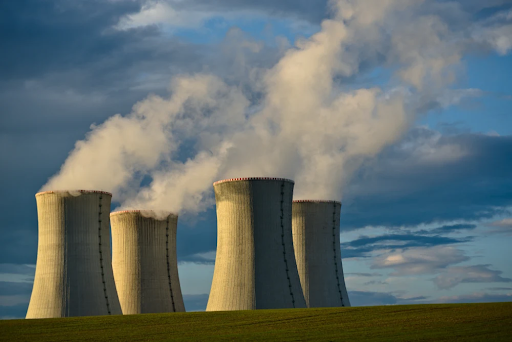
In comparison with other, cleaner sources of energy that are being considered, nuclear power provides the most energy in a process-to-production ratio. According to Issues and Controversies, an Internet infobase, the industrial structures that “contain and control the fission process can generate energy continuously and require a much smaller land footprint than solar or wind farms.” Considering environmental conservation, nuclear plants take up less space than alternative energy sources, and are less taxing on the surrounding environment when handled properly. Today, there are around 400 nuclear plants around the world that provide around a tenth of the world’s electricity; in comparison, “it takes around 6,000 coal plants to make a third of the world’s electricity. In fact, one small uranium pellet creates about as much energy as a ton of coal” (Business Insider).
David Gattie is an Associate Professor of Engineering and a Senior Fellow in UGA’s Center for International Trade and Security and School of Public & International Affairs, with 14 years of experience in the private sector. In his article, “Twenty-First- Century US Nuclear Power: A National Security Imperative,” he emphasizes the importance of safety around producing nuclear energy in the U.S. A general consensus, he explains, is that “atomic energy has long been controversial within the public domain due in part to concerns about reactor safety… and technologies that could be misused for nuclear weaponry” (Gattie). However, Gattie continues, the U.S. should continue to invest in nuclear energy in alliance with different countries, in order to prevent conflict and ensure economic stability within production.
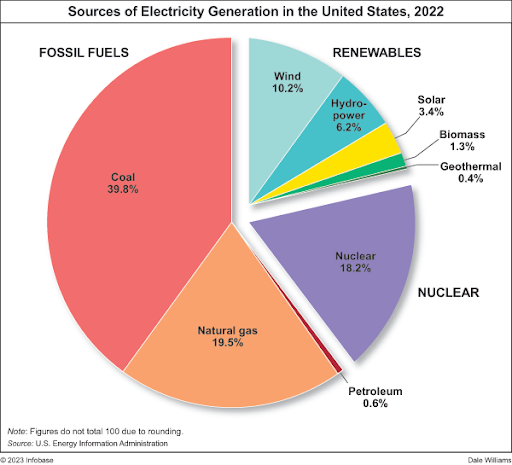 With the impact of nuclear disasters, like the contamination of the plant in Fukushima, still fresh in the world’s mind, many fear the consequences of nuclear power plants popping up around the country. Currently, the U.S. government is divided over the expansion of nuclear energy, with Secretary of Health Robert F. Kennedy Jr. opposing President Trump’s promotion of local nuclear reactors.
Kennedy’s “Make America Healthy Again” movement aims to promote cleaner ingredients and better habits among the American people. However, many of his claims against modern medicine and technology are baseless. Kennedy has “long cited the forms of radiation emitted by cellphones, power lines and home appliances as a probable cause of ‘many of today’s chronic diseases’” (Broad). In addition to apprehension towards radiation exposure, concerns over the cost of production and waste treatment have prevented the U.S. from fully investing in nuclear energy. Despite concerns over the high cost, “historic investments, along with tax incentives and programs like the Civil Nuclear Credit Program” have restarted production in qualified, retired plants, and “[accelerated] the deployment and demonstration of advanced large-scale reactors” (“Nuclear Energy”). The Civil Nuclear Credit Program, commenced in 2024, employs six billion dollars in calculated investments to preserve the current U.S. reactor fleet (“Nuclear Energy”). With government backing and collaboration, the emerging industry of nuclear energy production can provide high-paying jobs across the country.
Many hold differentiating opinions on the sustainability and safety of nuclear power. In our future, we will continue to see debates over the use of nuclear energy at the local level. New endorsement has emerged from officials in government, including the President of the United States. Evident through its high production ratio, nuclear power is the most sustainable option for energy production in the long term. Nuclear energy is the key to powering our future; for more information on current policies, visit US Nuclear Power Policy.