



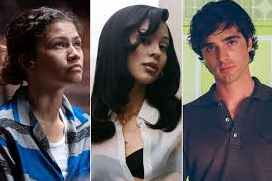






The new “Wuthering Heights” contains more cellophane, eggs, and (fake) skin walls than I could ever anticipate. Though the movie came out Feb. 13, 2026, the book by Emily Brontë was originally released in 1847. The story follows the wild and destructive relationship between Cathy Earnshaw and Heathcliff, which spans generations. “Wuthering Heights” has become a classic piece of Gothic literature, inspiring music and films for decades. The most recent movie adaptation stars Margot Robbie and Jacob Elordi as Cathy and Heathcliff, respectively.

Directed by Emerald Fennell–of “Saltburn” fame–the film seems to try to mirror some of the more bizarre and sensual pieces of media that have become popular as of late. The cinematography was dynamic, and every actor delivered an engrossing performance. Sadly, as interesting as the movie was…it was not “Wuthering Heights”. In fact, most of the original narrative was cut, and the 2-hour run time is padded with dizzying montages set to music by Charlie XCX.
A big issue with the movie is the race change of Heathcliff. In the book, most of the plot’s issues stem from the fact that Heathcliff is dark-skinned. Elordi, however, is white. This change is akin to taking away Elsa’s powers in “Frozen” and just making her a normal girl. Similarly, Robbie is double the age of Cathy Earnshaw, who is meant to be 12-18. Cathy is extremely immature and impulsive due to her age, which does not translate well on screen because Robbie is 35.
Passionate as the characters are, the book is not a love story for the ages. Rather, the reader watches the trauma the characters inflict on all they come into contact with. On the other hand, the film mainly focuses on their romance and how they yearn and burn to be with each other. Simply put, the movie was a piece of erotica (let’s just say, I wouldn’t bring the kids to this one). “Wuthering Heights” was a book about social class, abuse, and revenge, and the movie turned it into a freak fest. All of the complex themes that get explored in the original book are thrown out the window in favor of a romanticized, corrupted version.
Adaptations can be made without copying the source material word for word. A great example of this is “Clueless,” an adaptation of the novel “Emma” by Jane Austen. In this case, the original story serves as loose inspiration, providing “Clueless” with an interesting background. This tactic also allows the new movie to have success in its own right, separate from the source material. If Fennel wanted to spin the story, then she could have given “Wuthering Heights” a new life; instead of making whatever film she wanted and titling it “Wuthering Heights” for publicity’s sake.
Some people claim that the movie, in all its stylized glory, is a statement on book adaptations misinterpreting their source. They believe that the movie is a piece of satire meant to criticize the romanticization of abuse. As cool as this sounds, I don’t think it’s the case. Fennell said in an interview that the movie is inspired by a version of “Wuthering Heights” that she “remembered reading as a 14-year-old, that isn’t quite real”. She further stated that “it is Wuthering Heights, but it isn’t.” While it’s clear she never meant to make a carbon copy of the book, what she did deliver was a far cry from the cinematic masterpiece some claim it to be. Though the design and directing were extremely compelling, the story lacked the extra bizarre elements it needed to pull off satire, and was much too odd to be a serious piece of work.