













Icebreaker, It Ends With Us, The Love Hypothesis, and Punk 57. All of these titles have teenagers leaving raving reviews. But what are the real effects of new-age romance books on a teen’s mental health? Do they teach them about healthy relationships? Most new romance books showcase poor relationship habits, detrimental to a teen’s mental health.
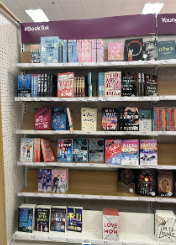
As teenagers begin reading higher-level novels, romance is usually quickly picked up. One of the largest displays at Target is just for romance novels that all, oddly, look like they have the same cover. Colleen Hoover books overtake about half of the romance section, titles like “Ugly Love” and “November 9” litter the shelves. Diving into these books, a teen would find romanticized abuse stories, very explicit content, and glamorization of inappropriate relationships. “It Ends With Us” depicts a highly abusive relationship, wherein no real repercussions are had for the abuser, and he has a sort of “redemption” arc (though this does not happen in the film). Another Hoover novel, “Ugly Love” showcases an emotionally unavailable man who is closed off to the love interest. The problem is, books largely impact what a person’s meaning of love is. This is especially true for teenagers. If a teen is reading a book featuring a romanticized, manipulative love interest, they are more likely to get and/or stay in a relationship with a similar partner.
But Hoover isn’t the only offender; Hannah Grace, Ali Hazelwood, and Penelope Douglas are all guilty of authoring books that can negatively affect a teen’s perception of a healthy age-appropriate relationship. Grace’s explicit adult romance “Icebreaker” has a cover featuring a cartoon hockey player and ice skater just chilling on the rink. There is no way to tell that the book contains graphic scenes not meant for teen eyes. For all you know, it’s a sports rivalry book ending in a cute, age-appropriate relationship. Hazelwood’s “The Love Hypothesis” could be about two STEM students who fall in love through scholarly work, though it is a teacher-student relationship. In fact, most of Hazelwood’s covers appear geared toward younger audiences, though they contain explicit content. These books can lead teens to have unrealistic expectations for relationships, leading to disappointment and harmful mental effects (not to mention the effect on tween audiences).
The argument can be made that none of these books are classified as “young adult”, so teens should not be reading them in the first place. But many of the books have “cartoonish” covers that look appropriate for teen readers. One could further the argument by saying parents need to moderate what their children read, but teenagers these days usually find their own books. Plus, many parents can’t tell just by glancing over at their teen’s book that it is inappropriate (again, the covers are misleading).
As a society, we should prioritize the mental health of our younger generations. So, let’s go back to the days of romance books looking like what they are. No bright cartoon covers that look straight out of Disney Channel.