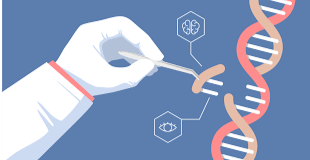
Advances in genetic engineering have become a hot topic for debate in the past decade. These advances have created powerful tools that could change medicine and technology forever. Genetic engineering is a modern technology that alters genes and DNA in organisms, such as animals, plants, and microorganisms. Technologies like CRISPR allow scientists to alter DNA with precision. And while the technology still raises ethical concerns, it is easy to say that it should be used to prevent and treat diseases. At the same time, strict limits should prevent its use for non-medical advancements like designer babies. Genetic engineering should exist for one purpose: protecting human health.
One of the most important advances in genetic engineering is CRISPR, which stands for “clustered regularly interspaced short palindromic repeats.” According to the National Institutes of Health, a federal agency that conducts and supports medical research, CRISPR works by using a piece of RNA to guide an enzyme called Cas9 to a specific location in DNA. The enzyme cuts the DNA so that scientists can remove or replace a gene. This process allows researchers to correct harmful mutations or insert healthier genes.
Because of this, this means that scientists can potentially correct genetic orders responsible for certain diseases. A research article published in JAMA Network, which publishes research for the American Medical Association, explains that CRISPR genome editing allows scientists to change DNA sequences in living cells and could help treat or even cure genetic disorders. By repairing defective genes, the technology could address diseases that previously had no cure.
Using genetic engineering for disease prevention could save millions of people. Conditions such as cystic fibrosis, sickle cell disease, and Huntington’s disease are caused by identifiable genetic mutations. If these mutations could be corrected before symptoms develop, patients could avoid lifelong suffering. The U.S. National Science Foundation says that CRISPR-Cas9 works by using RNA to guide a DNA-cutting enzyme to specific genetic sequences, allowing scientists to repair harmful genes.
However, genetic engineering must have limitations. Allowing parents to alter traits such as intelligence, height, or eye color raises serious ethical questions. Designer babies could increase inequality and encourage the idea that some genetic traits are more valuable than others. If only wealthy families could afford genetic enhancements, society could become divided across biological lines. Medicine should focus on treating disease, not redesigning human characteristics.
Some people argue that genetic engineering should not be used at all because of potential risks and unintended consequences. They worry that editing DNA could lead to mistakes or changes that affect future generations. These concerns are valid, and scientists themselves acknowledge that gene editing can sometimes create unintended changes in DNA and that more research is needed to make sure that it is truly safe.
However, the technology would entirely ignore its huge potential to relieve suffering. Modern medicine already uses powerful technologies such as organ transplants and chemotherapy despite risks because the benefits often outweigh them. Instead of banning gene editing, governments and scientific organizations should regulate it carefully. Strict laws could limit its use to medical purposes, require safety testing, and prohibit genetic advancements.
Genetic engineering represents one of the most important medical advances of the 21st century. When genetic engineering is used to prevent diseases, it could eliminate devastating genetic diseases and dramatically improve the quality of life. But without clear ethical boundaries, the same technology could create serious social problems. The solution is not to abandon the advancements of gene editing, but to use it for the greater good. CRISPR and similar tools should be used for healing, not for designing the next generation of humans.